The Zoonotic Ballot: Why 2026 Will Decide Who Speaks for the Diseases That Cross Species Lines
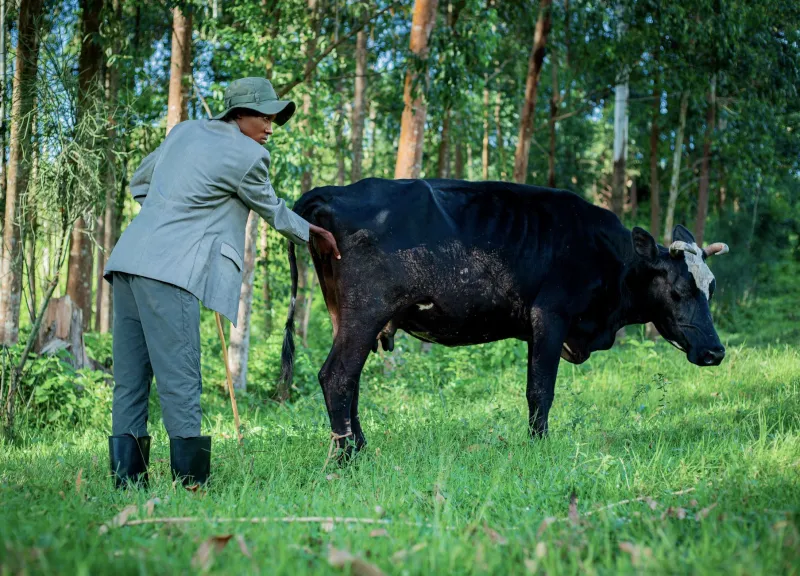
Somewhere on a dairy farm in the Central Valley, a herd health check is quietly doubling as the front line of national biosecurity. Somewhere in a Wisconsin deer season, a lymph node sample is the only thing standing between chronic wasting disease and the next county. And somewhere in a congressional budget office, the line item that funds the surveillance infrastructure behind both moments is being drafted by people who have never palpated a lymph node in their lives.
This is the paradox at the heart of American zoonotic disease policy: the professionals best trained to detect pathogens at the animal-human interface are almost entirely absent from the rooms where surveillance policy is written. The 2026 midterms offer the profession a rare, time-limited chance to change that.
A Fragmented System Facing a Converging Threat
America's zoonotic surveillance is a patchwork. USDA handles livestock and wildlife on the agricultural side. CDC manages the human health interface. State veterinarians operate under fifty different statutory schemes with wildly variable funding. When a pathogen like highly pathogenic avian influenza jumps from wild birds to poultry to dairy cattle to human infections, the seams between these agencies become the weak points where detection fails.
The next Congress will confront reauthorization decisions on interagency pandemic preparedness, farm bill conservation programs with disease-surveillance components, and appropriations that determine whether state veterinary diagnostic capacity expands or continues to erode. Committee composition — Agriculture, Energy and Commerce, Appropriations subcommittees — will shape who holds the pen.
The Absent Expertise
Here is the uncomfortable arithmetic. Congress includes physicians, nurses, dentists, and pharmacists. It includes almost no veterinarians at any given time. Yet the One Health premise — that human, animal, and environmental health are inseparable — is not an abstract philosophy. It is the daily job description of roughly 120,000 American DVMs.
When an Agriculture Committee member hears testimony about H5N1 in dairy herds, the questions asked, the assumptions accepted, and the urgency conveyed all depend on whether anyone in that member's orbit understands herd biosecurity, bulk tank surveillance, or the practical limits of state-federal response authority. Too often, no one does. The result is policy written in metaphors rather than data.
Where a Single Voice Could Tip the Balance
The 2026 map includes open seats and competitive races in agricultural and rural districts where veterinary credibility carries unusual weight — state legislative districts in the Upper Midwest where chronic wasting disease shapes hunting policy, Plains states where cattle health is economic policy, and coastal districts where aquaculture and zoonotic surveillance intersect. In races routinely decided by margins smaller than the number of practicing veterinarians in the district, a candidate with clinical standing — or a profession mobilizing behind informed challengers — can move outcomes.
VetPAC's position is not partisan. It is functional: we evaluate candidates on demonstrated understanding of animal health infrastructure, and we urge members to do the same regardless of party.
Considering the Ultimate Advocacy: A Starter Toolkit for DVM Candidates
For veterinarians weighing a run themselves — school board now, state house later — the path is more accessible than most assume:
- Start with the local board. Boards of health, water districts, and zoning boards are where animal-agriculture policy actually gets made, and they are chronically short of qualified candidates.
- Map your district's animal economy. Whether it is dairies, equine facilities, shelters, or companion-animal density, your clinical knowledge translates directly into policy expertise your opponents lack.
- Build the coalition early. Producer groups, hunting and conservation organizations, public health departments, and pet-owner constituencies rarely share a ballot, but a veterinary candidate can speak credibly to all of them.
- Learn the budget calendar. Surveillance funding lives or dies in appropriations cycles. Candidates who understand fiscal timing outperform candidates who only understand the science.
- Protect your license. Understand your state board's rules on holding office while practicing — most are workable, but clarify before announcing.
The Window Is Open, Briefly
Zoonotic threats do not respect election calendars, but policy does. The Congress seated in January 2027 will inherit whatever surveillance architecture survives the next two budget cycles — and will decide whether the profession's expertise finally has a seat at the table or remains a phone call away that no one thinks to make.
The profession has the numbers, the credibility, and the stakes. What it has lacked, cycle after cycle, is the decision to use them.