Feed Directives, Fractured Relationships: How Federal Antibiotic Rules Are Redrawing the Map of Food Animal Practice
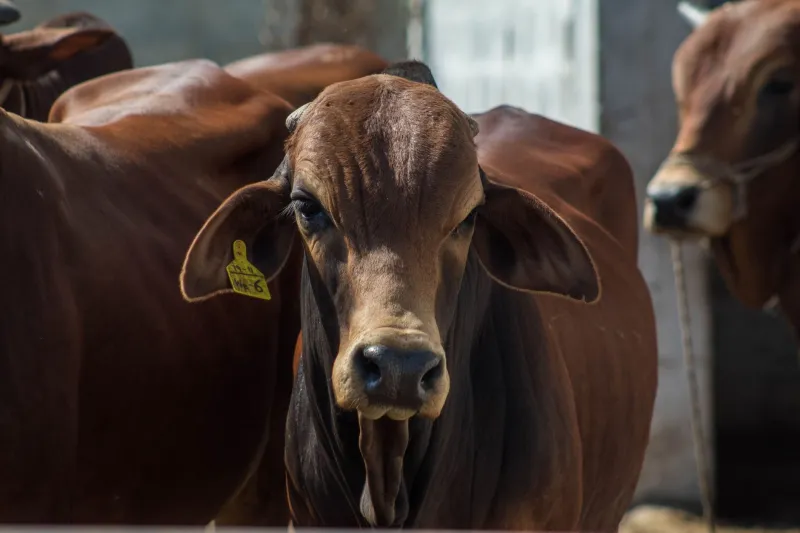
When the Food and Drug Administration's Veterinary Feed Directive regulations reached full implementation, the stated ambition was straightforward: bring licensed veterinarians into the decision-making loop for medically important antibiotics administered through livestock feed, thereby advancing responsible antimicrobial stewardship across American agriculture. Few in the veterinary community disputed the underlying rationale. Antibiotic resistance is a legitimate public health concern, and the era of over-the-counter access to certain antimicrobials had produced real and documented problems.
But good intentions do not automatically produce workable policy. Years after the VFD framework took full effect, a growing chorus of food animal practitioners is describing a regulatory environment that has added substantial administrative weight to an already strained rural veterinary infrastructure — without delivering the stewardship outcomes the rule was designed to achieve. The question before the profession now is not whether the VFD was a mistake, but whether its current form is serving its stated purpose, and what a reformed framework would actually look like.
What the VFD Actually Requires — and What It Costs
Under the VFD system, a licensed veterinarian must issue a written directive before a producer can obtain or use a VFD drug in animal feed. That directive must specify the animals covered, the drug and dosage, the duration of use, the withdrawal period, and the condition being treated. Copies must be maintained by the veterinarian, the producer, and the feed distributor for a period of two years. Any deviation from the directive's terms — a change in animal numbers, an extended treatment duration — requires a new directive.
On paper, this sounds manageable. In practice, food animal veterinarians serving large agricultural operations or geographically dispersed clientele describe a paperwork architecture that consumes hours of professional time each week. A single swine operation managing multiple production phases may require dozens of individual directives annually. A mixed-practice veterinarian serving cattle producers across three counties may find that VFD documentation is consuming time that once went toward farm visits, herd health consultations, or continuing education.
The compliance burden does not fall on the veterinarian alone. Producers — particularly smaller family operations — report confusion about recordkeeping requirements, uncertainty about feed distributor obligations, and anxiety about audit exposure. In some cases, that anxiety has led producers to delay or forgo treatment rather than navigate a directive process they find opaque. That outcome is the precise opposite of what sound stewardship policy should produce.
The Doctor-Client-Patient Relationship Under Pressure
At its core, the Veterinary Feed Directive was premised on a belief that a meaningful veterinarian-client-patient relationship, or VCPR, would serve as the gatekeeping mechanism for appropriate antibiotic use. The veterinarian's professional judgment would replace the feed store shelf as the point of access control. This is, in principle, a defensible model.
The difficulty is that the VFD framework has not been accompanied by policies that make robust VCPRs feasible across the full geography of American agricultural production. Rural veterinary workforce shortages remain severe. In many counties across the Great Plains, the Mountain West, and the rural South, food animal practitioners are stretched across territories so large that the kind of regular herd-level engagement the VFD implicitly envisions is simply not possible.
When the nearest food animal veterinarian is two hours away and fully booked for the next three weeks, a VFD requirement does not strengthen the VCPR — it strains it. Producers who once had occasional but functional relationships with local veterinarians may now find those relationships characterized primarily by paperwork transactions rather than genuine clinical engagement. The directive becomes a bureaucratic formality, not a meaningful professional consultation.
This dynamic carries downstream risks. Veterinarians who feel reduced to compliance processors rather than trusted advisors may withdraw from food animal practice entirely, accelerating the very workforce crisis that makes rural agricultural medicine so precarious. Producers who associate veterinary contact with regulatory friction may become less likely to seek professional guidance when genuine health challenges arise.
Is the Policy Achieving Its Stewardship Goals?
The honest answer is that the evidence base remains incomplete. FDA has not published comprehensive, longitudinal data demonstrating that VFD implementation has produced measurable reductions in antimicrobial resistance indicators in food animal production at the national level. Some industry-level antibiotic sales data suggests modest declines in certain drug categories following implementation, but isolating the VFD's contribution from other concurrent market and regulatory pressures is methodologically difficult.
What is clearer is that the VFD framework, as currently structured, is not uniformly achieving its goal of meaningful veterinary oversight. In under-served rural markets, the directive process can function as a rubber-stamp exercise conducted remotely by veterinarians who have never visited the operation in question. That outcome satisfies the letter of the regulation while defeating its spirit entirely.
The stewardship gains the VFD was designed to produce depend on the quality of veterinary judgment applied at the point of directive issuance. A directive issued by a veterinarian with deep knowledge of a specific herd's health history, production practices, and disease pressures is a genuinely different document than one issued to satisfy a compliance checkbox. Current policy does not reliably distinguish between the two.
What Reform Should Look Like
VetPAC believes the veterinary profession must arrive at the next FDA review cycle with a concrete reform agenda, rather than simply registering frustration. Several principles should anchor that agenda.
Tiered administrative requirements calibrated to practice setting and relationship depth would reduce paperwork burden without sacrificing oversight. Veterinarians with documented, ongoing herd health relationships should face fewer transactional friction points than those issuing directives for operations they have never physically visited.
Telehealth integration deserves serious consideration as a mechanism for extending meaningful VCPR coverage to underserved agricultural regions. FDA's current guidance on VCPR establishment via telemedicine is inconsistent with the geographic realities of rural food animal practice, and that inconsistency should be addressed directly.
Workforce investment must accompany any stewardship framework that depends on veterinary gatekeeping. A VFD system operating in a market with adequate rural veterinary coverage functions differently than one operating in a practitioner desert. Policy that ignores this distinction is policy designed to fail in the communities that need it most.
Standardized, interoperable recordkeeping tools — developed with input from practicing veterinarians rather than imposed by regulatory fiat — would reduce the compliance burden while potentially improving the quality and utility of the data collected.
The Advocacy Imperative
The Veterinary Feed Directive is not going away, nor should it. The principle of veterinary oversight over medically important antimicrobials in food animal production is sound, and the profession should own that principle rather than cede it to critics who would prefer no oversight at all.
But ownership requires engagement. It requires food animal practitioners to document and articulate the specific ways in which current VFD implementation is falling short — not to undermine the policy, but to improve it. It requires veterinary organizations to arrive at FDA with data, with proposed regulatory language, and with the credibility that comes from having led on stewardship rather than simply reacted to it.
The next review window will not wait for the profession to get organized. VetPAC urges every food animal practitioner, every state veterinary medical association, and every allied agricultural organization to treat VFD reform as a near-term legislative and regulatory priority — before the window closes and the current framework calcifies into the permanent architecture of American food animal medicine.