The Missing Ballots of the Exam Room: Turning Veterinary Licenses Into Registered Voters
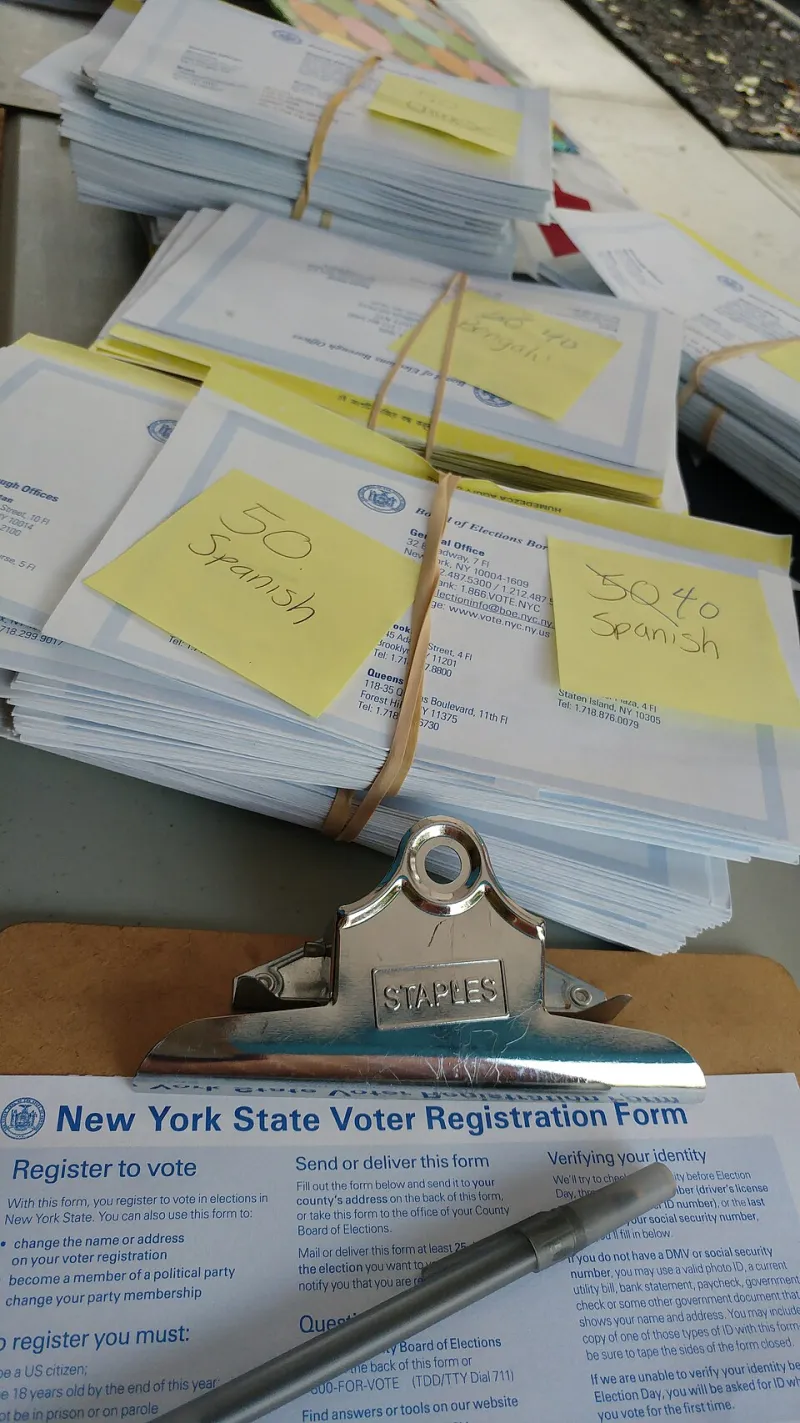
Photo: Sumanah, CC BY-SA 4.0, via Wikimedia Commons
Veterinary medicine has never lacked for people willing to work late, drive to a farm at midnight, or advocate for a patient no one else will treat. What the profession has lacked, reliably and measurably, is voters.
Polling of licensed health professionals consistently shows registration and turnout rates well below what the profession's education and income levels would predict — and veterinary medicine is no exception. Anecdotal data from state association drives suggests that a substantial share of DVMs and nearly half of registered veterinary technicians cannot confirm they are registered at their current address. Call them the ghost voters of veterinary medicine: licensed, credentialed, deeply invested in the profession's future, and invisible on the rolls.
The Anatomy of an Absentee Profession
The reasons are mundane and cumulative rather than ideological. Veterinary schedules are among the least predictable in American professional life — rotating on-call duties, emergency caseloads, and Saturday clinics make Election Day planning genuinely difficult. Licensure adds a second layer of confusion: many practitioners maintain licenses in multiple states, move for internships or corporate transfers, and lose track of which address their registration reflects. A DVM who completed a rotating internship in one state, a residency in another, and an associate position in a third may simply not know where she is registered — or whether she is registered at all.
Then there is fatigue. A profession running on compressed sleep and emotional exhaustion does not prioritize paperwork. And technicians, who perform much of the profession's hands-on labor, report the lowest registration rates of any segment — a civic deficit that mirrors their underrepresentation in legislative hearing rooms.
Why the Gap Matters at the Statehouse
Legislators count constituents, not credentials. A scope-of-practice bill, a telemedicine restriction, or a controlled substances scheduling decision is weighed against the volume and intensity of constituent contact. When a legislator's veterinary constituents number in the dozens of registered voters rather than the hundreds, the profession's arguments compete against better-mobilized stakeholders with more visible electoral weight.
The math is unforgiving. In most state senate districts, a fully mobilized veterinary community — DVMs, technicians, practice managers, and their households — could plausibly represent a quarter of a point of the electorate. That is enough to earn a returned phone call. Scattered and unregistered, the same community earns nothing.
A Registration Playbook Advocacy Groups Can Run Now
The fix does not require new technology or large budgets. It requires inserting registration into moments when veterinary professionals are already gathered and already handling paperwork.
State board renewal. Every DVM and technician renews a license annually or biennially, often online. State associations should petition boards to include a nonpartisan voter registration prompt and link at renewal — a single checkbox that reaches the entire licensed population at the moment their professional identity is most salient.
CE meetings and state association conferences. Registration tables staffed by volunteer members, positioned near the coffee, convert idle minutes into registrations. State VMA conventions and technician association meetings are the natural venues; continuing education compliance already requires attendance, so the audience is captive.
National conventions. The AVMA convention draws thousands of practitioners who are, by definition, travelers — precisely the population most likely to have stale registrations. National registration events, paired with state-based absentee and mail ballot guidance, address the multi-state licensure problem directly.
Employer and corporate partnerships. Large practice groups and corporate consolidators control the schedules of a growing share of the workforce. A corporate policy of paid voter-protected time and an internal registration reminder costs little and reaches employees that state associations cannot.
Technician-first outreach. Because technicians show the largest gap, targeted drives at credentialed technician programs, exam prep courses, and state technician associations should be resourced separately rather than folded into DVM campaigns.
From Registration to Relationship
Registration is the floor, not the ceiling. Advocacy organizations that run drives should capture consent for ongoing engagement — legislative alerts, hearing testimony sign-ups, PAC participation — so that a newly registered voter becomes a repeat constituent rather than a one-time act. The profession's political leverage has always been latent; the work of organizations like ours is to make it active, one renewal cycle and one convention floor at a time.
Half the profession cannot afford to keep sitting out elections in which the rules of its practice are written. The playbook exists. What remains is the will to run it.