Vanishing Practitioners, Vulnerable Farms: The Rural Veterinary Crisis Reshaping U.S. Food and Livestock Policy
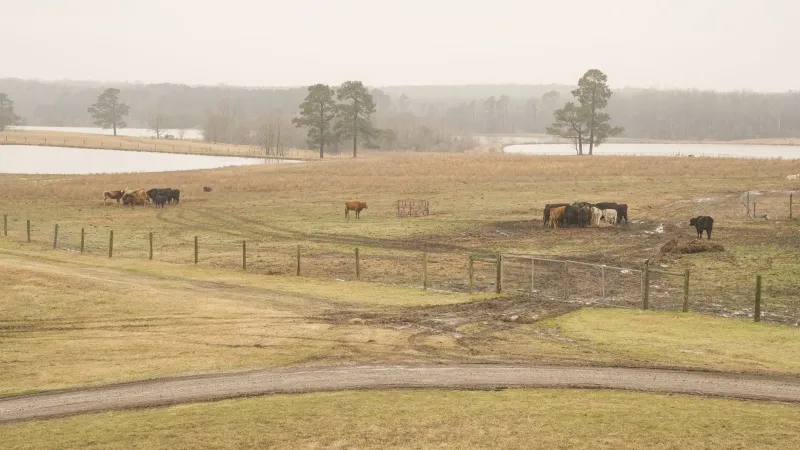
Drive far enough into the agricultural heartland of Nebraska, the Mississippi Delta, or the high desert rangelands of eastern Oregon, and you will encounter a quiet emergency that rarely makes national headlines. Cattle ranchers are managing illness outbreaks without professional guidance. Hog producers are making diagnostic decisions based on internet searches. Sheep and goat operations are going entire seasons without a single veterinary visit. These are not isolated anecdotes — they are symptoms of a structural collapse in rural large-animal veterinary coverage that federal agencies have spent years documenting and that policymakers have been frustratingly slow to address.
The U.S. Department of Agriculture's Veterinary Medicine Loan Repayment Program (VMLRP) formally identifies "veterinary shortage areas" — geographic regions and practice specialties where professional veterinary capacity falls critically short of agricultural and public health need. As of the most recent assessment cycles, hundreds of counties across more than forty states carry that designation. The implications are not merely professional. They are economic, epidemiological, and deeply political.
What a Veterinary Desert Actually Looks Like
The term "veterinary desert" may sound dramatic, but the on-the-ground reality justifies the language. In many shortage counties, the nearest accredited large-animal practitioner may be two or three hours away — a distance that renders routine herd health management economically impractical and emergency response nearly impossible. When a respiratory illness moves through a feedlot or a reproductive complication threatens a beef cow operation's calving season, time is measured in hours, not days.
Without regular veterinary oversight, producers lose access to prescription pharmaceuticals that require a valid veterinarian-client-patient relationship (VCPR). They lose the professional documentation required to participate in federal disease surveillance programs. They lose the early-warning infrastructure that catches conditions like bovine respiratory disease, brucellosis, or even early-stage foreign animal disease incursions before they escalate into regional crises.
The food safety consequences flow directly from this breakdown. Meat and poultry that enters the national supply chain without adequate veterinary oversight at the production level represents a gap in the layered food safety architecture the United States has spent decades constructing. USDA's Food Safety and Inspection Service (FSIS) and Animal and Plant Health Inspection Service (APHIS) depend on a functioning network of private practitioners as the first line of disease detection. When that network frays, the entire system becomes more brittle.
Federal Tools That Exist — and Why They Are Not Enough
Congress and the USDA have not been entirely passive. The VMLRP, authorized under the National Veterinary Medical Service Act and reauthorized through successive farm bills, offers loan repayment assistance to veterinarians who commit to practicing in designated shortage areas for a defined period. The program has placed practitioners in underserved communities and represents a meaningful policy instrument.
However, the program's funding has chronically lagged behind the scope of the problem. Appropriations have not kept pace with the volume of eligible applicants, and the geographic distribution of awards does not always align with the most acute shortage zones. Practitioners who complete their service commitments frequently relocate to more economically viable urban or suburban practices once their obligations conclude, creating a revolving-door dynamic that addresses immediate gaps without building durable rural infrastructure.
Beyond the VMLRP, a patchwork of state-level incentive programs has emerged — some offering additional loan forgiveness, others providing practice establishment grants or rural housing assistance. States including Kansas, Iowa, and Minnesota have piloted programs that pair financial incentives with mentorship networks designed to ease the transition for new graduates considering rural large-animal work. These initiatives are promising, but they remain inconsistent, underfunded, and poorly coordinated with federal efforts.
Pending legislation in the current congressional session includes provisions that would expand VMLRP funding ceilings, broaden eligibility criteria, and create new categories of incentives for practitioners willing to serve multiple shortage counties through mobile or circuit-based practice models. Whether those provisions survive the farm bill negotiation process — a notoriously compressed and politically contested arena — will depend significantly on the advocacy engagement of the veterinary profession itself.
The Farm Bill Window and Why It Matters Now
The farm bill is not simply an agricultural spending package. It is the primary legislative vehicle through which Congress shapes rural infrastructure policy, food safety frameworks, and the federal programs that underpin veterinary workforce development. Farm bills operate on roughly five-year reauthorization cycles, and the negotiations surrounding each cycle are among the most consequential — and most opaque — processes in Washington's legislative calendar.
Missing the active drafting and markup phase of a farm bill means accepting another half-decade of status quo policy. For rural veterinary coverage, the status quo is deteriorating. Shortage area designations have expanded, not contracted, over successive farm bill cycles. The profession cannot afford to arrive late to this conversation.
Veterinary professionals who represent practices in or adjacent to shortage areas carry particular credibility in these discussions. A large-animal practitioner who can describe, in concrete clinical and economic terms, what it means to cover a four-county territory alone — or to watch a neighboring county go entirely without coverage — provides lawmakers and their staff with the kind of grounded testimony that abstract workforce statistics cannot replicate.
What Veterinary Professionals Can Do Right Now
Engagement does not require a trip to Washington, though congressional visits during recess periods remain among the most effective advocacy tools available. The following actions are accessible to any veterinary professional with a few hours and a willingness to make their expertise visible to the people shaping policy:
Contact your House and Senate agriculture committee representatives directly. Members of the House Committee on Agriculture and the Senate Committee on Agriculture, Nutrition, and Forestry hold disproportionate influence over farm bill provisions. A constituent letter or a scheduled district office meeting from a credentialed large-animal practitioner carries genuine weight.
Document the shortage in your own region. Anecdotal evidence from practitioners on the ground supplements USDA's formal designation data. If you are covering territory that exceeds sustainable practice capacity, or if you are aware of producers in your region operating without any veterinary access, that information should be communicated to your state veterinary medical association and, through appropriate channels, to federal agency contacts.
Support and amplify VMLRP expansion advocacy. The American Veterinary Medical Association (AVMA) and affiliated state VMAs have been active in pushing for increased VMLRP appropriations. Coordinated pressure from individual practitioners reinforces those organizational efforts and signals to legislators that the workforce issue has broad professional salience.
Engage state legislators in parallel. Federal farm bill provisions interact with state-level enabling legislation. State agricultural committees are often more accessible than their federal counterparts and can move supplementary incentive programs on shorter timelines than Congress.
A Profession With a Stake in the Outcome
The rural veterinary shortage is sometimes framed primarily as a workforce pipeline problem — a matter of graduate school debt loads, urban practice economics, and the lifestyle calculus of new DVMs. Those factors are real and deserve policy attention. But the crisis also reflects decades of underinvestment in the rural agricultural infrastructure that large-animal medicine requires to function sustainably.
Correcting that underinvestment requires policy intervention, and policy intervention requires political will. Political will, in a representative democracy, follows constituent engagement. The veterinary profession possesses both the professional authority and the civic standing to move this conversation from the margins of the farm bill to its center — but only if practitioners make their voices heard before the legislative window closes.
The farms are waiting. The animals are waiting. And the next farm bill cycle will not.