Your Clinical Voice Belongs in the Hearing Room: A Veterinarian's Complete Guide to Testifying Before Congress
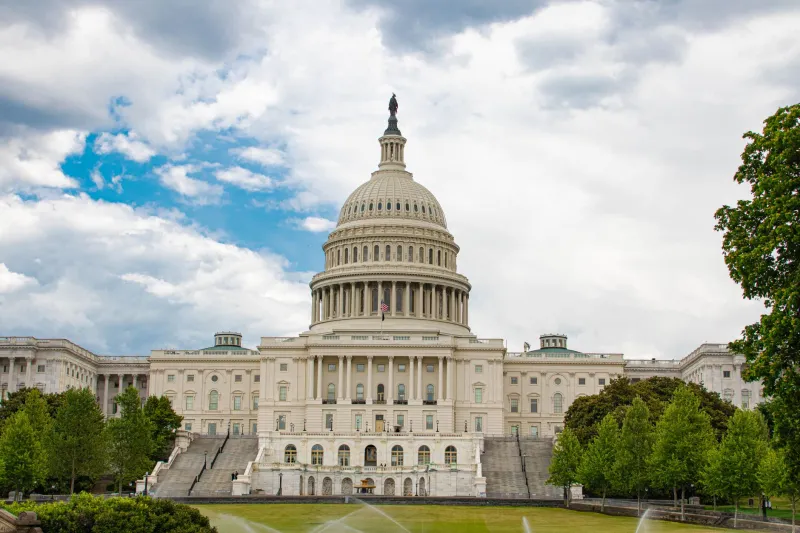
Your Clinical Voice Belongs in the Hearing Room: A Veterinarian's Complete Guide to Testifying Before Congress
Most veterinarians spend their careers perfecting the art of the physical exam, not the art of the opening statement. The fluorescent lights of a congressional hearing room feel worlds away from the examination table — and for many DVMs, that distance feels intentional. It is not. Lawmakers actively seek credentialed professionals who can translate complex science into human consequence, and few professions are better positioned to do that than veterinary medicine.
Testifying before Congress is not reserved for lobbyists or academics with Washington connections. It is a civic process with defined procedures, and any veterinarian willing to invest the preparation time can participate meaningfully. This guide breaks that process into manageable stages.
Understanding Who Hears What — And Why It Matters
Before you can request to testify, you need to identify which congressional committee oversees the legislation relevant to your expertise. The U.S. Senate Committee on Agriculture, Nutrition, and Forestry and the House Committee on Agriculture handle the bulk of animal health and food safety legislation. The Senate Health, Education, Labor, and Pensions (HELP) Committee and its House counterpart address workforce and public health issues, including veterinary shortage designations. The Senate Environment and Public Works Committee occasionally touches on issues involving wildlife and environmental health.
Reviewing each committee's active legislative docket — available through Congress.gov — will help you identify bills where your clinical perspective adds genuine value. A large-animal practitioner from rural Kansas has a compelling story to tell during hearings on veterinary workforce funding. A small-animal specialist with experience in antimicrobial resistance brings credibility to drug policy discussions. The key is matching your expertise to the specific legislative question at hand.
How to Request an Opportunity to Testify
Contrary to popular assumption, witnesses at congressional hearings are not always drawn from a pre-existing list of Washington insiders. Committees routinely seek outside voices, particularly from professional organizations and credentialed practitioners who represent constituencies lawmakers care about.
The most effective path to the witness table typically runs through your professional associations. Organizations like the American Veterinary Medical Association (AVMA) and state veterinary medical associations maintain relationships with committee staff and can nominate members to testify on relevant legislation. Reaching out to your state association's legislative affairs contact is a strong first step.
Alternatively, you may contact committee staff directly. Each committee maintains a staff directory, and the professional staff members assigned to agriculture or public health portfolios are accustomed to fielding outreach from credentialed professionals. A concise, professional letter or email outlining your expertise, your geographic and clinical context, and the specific bill or hearing topic you wish to address is entirely appropriate. VetPAC members seeking support in drafting this type of outreach can access template resources through our advocacy portal.
Be prepared for the possibility that a given hearing cycle does not have an opening. Persistence and relationship-building over time yield results.
Preparing Your Written Statement
Every witness submits a written statement to the committee in advance — typically 48 hours before the hearing, though requirements vary. This document becomes part of the official congressional record, meaning it carries lasting weight beyond anything you say aloud in the room.
Your written statement should open with a brief professional biography that establishes your credibility without reading like a résumé. Follow with a clear articulation of the problem as you have witnessed it in clinical practice. Specificity is your greatest asset here. Aggregate data matters, but a concrete patient case — anonymized appropriately — or a description of what a rural community loses when its only large-animal veterinarian retires without a replacement, lands differently than statistics alone.
Keep your policy recommendations direct and actionable. Legislators and their staff are processing enormous volumes of information; a statement that clearly identifies one to three specific asks is far more useful than a broad critique of the status quo. Aim for five to seven pages in length, written at a level accessible to a non-specialist reader.
Delivering Oral Testimony Effectively
Oral testimony at most congressional hearings is limited to five minutes. You will not be able to read your full written statement aloud — nor should you try. Instead, prepare a condensed version that hits your two or three most critical points and closes with a clear, memorable ask.
Practice your delivery until the timing is precise. Committees do not look favorably on witnesses who run over, and the discipline of brevity forces you to prioritize what matters most. Speak at a measured pace; the room's acoustics and microphone setup can make rapid delivery difficult to follow.
Maintain a professional, composed demeanor throughout. Even when the subject matter is urgent, a calm and data-grounded presentation reads as authoritative. Emotional authenticity has its place — particularly when speaking to the human impact of policy failures — but it is most effective when anchored in factual precision.
Fielding Questions from Legislators
The question-and-answer portion of a hearing is where your clinical training becomes your most valuable asset. Lawmakers ask questions ranging from the highly specific to the genuinely uninformed, and your ability to respond with patience and clarity distinguishes effective witnesses from forgettable ones.
If you do not know the answer to a question, say so plainly and offer to follow up in writing. This is not a weakness — it is intellectual honesty, and it builds credibility. If a question contains a factual premise you believe to be incorrect, you may respectfully note the discrepancy before answering.
Prepare for politically charged questions by identifying in advance the aspects of your topic most likely to attract partisan framing. Your goal is not to take a political side but to anchor the conversation in clinical and scientific evidence. That posture serves veterinary medicine's long-term policy interests far better than any partisan alignment.
The Work That Follows
Testifying once is valuable. Building a sustained presence as a credible voice in the policy process is transformative. After your testimony, follow up with committee staff, share your written statement with your professional networks, and debrief with your state association on the outcome. Document your experience — future opportunities often come to those who have demonstrated they can perform well in the room.
VetPAC exists precisely to support this kind of engagement. When veterinary professionals show up in Washington with clinical authority and policy literacy, the legislation that governs animal health, food safety, and veterinary workforce development improves. The hearing room is not someone else's domain. It belongs to the profession — and that means it belongs to you.