When the Medicine Cabinet Goes Empty: How Drug Access Regulations Are Leaving Livestock Producers Behind
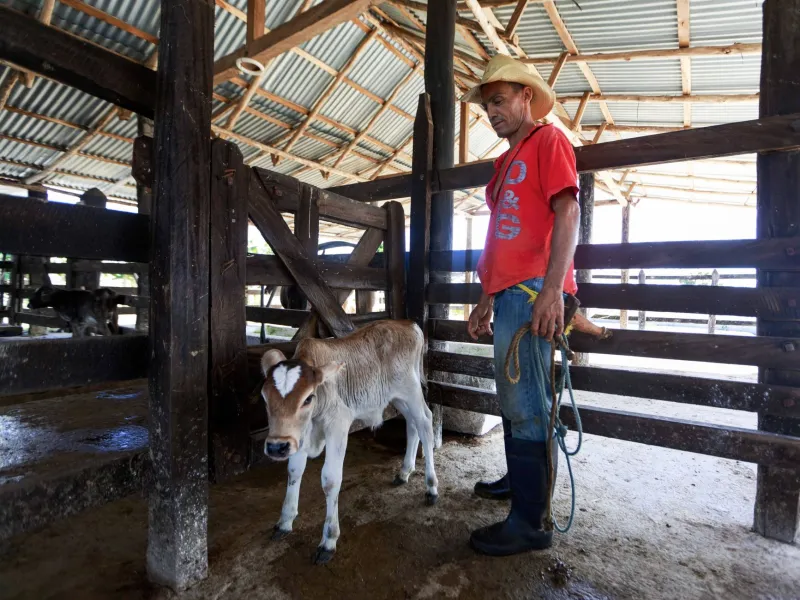
For generations, a rancher in rural Montana or a hog producer in eastern Iowa could walk into a farm supply store, assess their animals' condition, and purchase the medications they needed to keep their herds healthy. That practical autonomy — built on years of hands-on experience and a deep understanding of their own operations — has been steadily eroding. Today, a tightening web of federal and state regulations governing veterinary prescription authority is reshaping how livestock producers access the medicines their animals depend on, often without adequate infrastructure to support the transition.
The consequences are neither hypothetical nor distant. They are playing out right now on working farms across the country, and the veterinary profession has both a professional obligation and a political opportunity to respond.
The Regulatory Shift: What Changed and Why
The pivot began in earnest with the FDA's Veterinary Feed Directive rule in 2017, which brought medically important antibiotics used in animal feed and water under veterinary oversight. FDA Guidance 263, finalized and implemented in the years that followed, extended that framework further by transitioning dozens of over-the-counter antimicrobials — including widely used injectable products such as certain formulations of tetracyclines and penicillins — to prescription-only status.
The rationale was scientifically grounded. Antimicrobial resistance represents a genuine and growing threat to both human and animal health. Reducing indiscriminate antibiotic use in food-producing animals is a legitimate public health goal, and veterinary oversight of these medications is, in principle, an appropriate mechanism for achieving it. No serious stakeholder disputes the underlying science.
What the policy architects did not adequately account for, however, was the geographic and economic reality of rural veterinary practice in the United States.
The VCPR Problem in Rural America
At the center of this access crisis is the Valid Veterinarian-Client-Patient Relationship, or VCPR. Under federal standards — and most state definitions — a VCPR requires that a veterinarian has recently examined the animals in question or is personally acquainted with their care through timely farm visits. Without an established VCPR, a veterinarian cannot legally authorize a prescription. Without a prescription, a producer cannot obtain the medications now classified as prescription-only.
In densely populated regions with robust veterinary infrastructure, this requirement is manageable. In the rural communities where most of America's livestock production actually occurs, it is frequently an insurmountable barrier.
The American Association of Veterinary Medical Colleges has documented persistent shortages of food animal practitioners across large swaths of the Midwest, Great Plains, and Mountain West. In some counties, the nearest large-animal veterinarian is more than two hours away — and that practitioner's schedule may be booked weeks out. A producer facing a sick calf at 6 a.m. on a Tuesday cannot always wait for an appointment. Delay is not merely inconvenient; it can be fatal to the animal and financially devastating to the operation.
The economic arithmetic is unforgiving. A beef producer who once spent $12 on an OTC antibiotic must now absorb the cost of a veterinary farm call — which, accounting for travel time in rural areas, can easily run $200 to $400 — before a prescription can even be written. For small and mid-sized operations already operating on thin margins, that differential is not a minor inconvenience. It is a structural threat to viability.
Unintended Consequences the Policy Didn't Anticipate
When access to appropriate treatment is delayed or cost-prohibitive, producers do not simply accept worse outcomes passively. They adapt — sometimes in ways that undermine the very antimicrobial stewardship goals the regulations were designed to advance.
Some producers turn to veterinarians in adjacent states with less restrictive VCPR definitions, creating inconsistent oversight and regulatory arbitrage. Others source medications through channels that are less regulated or less transparent. Still others delay treatment until animals are severely ill, at which point higher doses and longer treatment courses may be required — the opposite of responsible stewardship.
None of these outcomes serve the public health objectives embedded in FDA Guidance 263. They are the predictable result of imposing a compliance framework without building the access infrastructure to support it.
What Congress Must Do
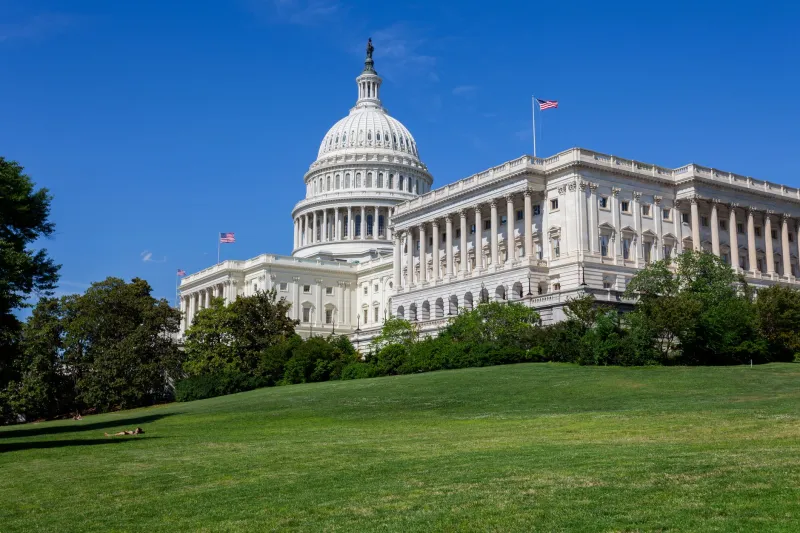
VetPAC believes that effective policy must be both scientifically defensible and practically workable. The current regulatory landscape fails that second test in rural America, and the veterinary profession must lead the charge for reform in the next Congressional session. Several concrete actions deserve priority attention.
Federally standardize and expand telehealth VCPR provisions. Several states have already amended their VCPR definitions to permit veterinarians to establish valid relationships through telemedicine consultations, without requiring a prior in-person visit. A federal standard that recognizes and protects telehealth-established VCPRs — developed in coordination with the FDA and the USDA — would dramatically expand access for rural producers while maintaining professional veterinary oversight. Legislation codifying this standard should be a top priority for veterinary advocates engaging with the House and Senate agriculture committees.
Fund rural veterinary workforce development aggressively. The Veterinary Medicine Loan Repayment Program, administered by the USDA's National Institute of Food and Agriculture, provides financial incentives for veterinarians to practice in underserved areas. The program is chronically underfunded relative to the scale of the shortage it addresses. Congress should substantially increase its appropriation and expand eligibility criteria to reach more food animal practitioners.
Create a formal transition assistance mechanism for affected producers. The FDA should be directed — through appropriations riders or standalone legislation — to develop a structured grace period and compliance assistance program for producers in documented veterinary shortage areas. This is not a request to abandon antimicrobial stewardship; it is a request for the federal government to acknowledge that stewardship cannot function where the oversight infrastructure does not exist.
Mandate a formal access-impact review before future guidance transitions. Before any additional OTC-to-prescription transitions are finalized, Congress should require the FDA to conduct and publish a rural access impact assessment — modeling the geographic distribution of licensed food animal veterinarians against the populations of producers who would be affected. Policy made without this data is policy made in the dark.
The Profession's Responsibility in This Moment
Veterinary professionals are uniquely positioned to make this case to lawmakers. They understand both the scientific imperatives of antimicrobial stewardship and the practical realities of rural practice. They can speak with authority about what happens on the ground when regulation outpaces infrastructure.
That credibility is an asset — but only if it is deployed. Members of the veterinary community who serve rural and food animal populations should be actively engaging their Congressional delegations, submitting comments during FDA rulemaking processes, and working through organizations like VetPAC to ensure that the profession's voice is present at every table where these decisions are being made.
The prescription pad has become a policy document. It is time for the people who sign those prescriptions to help write the policies that govern them.
VetPAC is committed to advancing evidence-based veterinary policy that serves the health of animals, the viability of agricultural communities, and the integrity of the veterinary profession. To learn how you can support federal and state advocacy efforts on veterinary drug access, visit vetpac.org.